Walk the Dog - the pet care and behaviour company

Showing posts with label cesar milan. Show all posts

Saturday, 6 November 2010

New book for dog owners Playing With Your Dog

Nurture the playfulness of your pet dog! Walk the Dog founder and award winning dog behaviour specialist Hanne Grice’s new book is out in time for Christmas Playing With Your Dog, you will learn how playing enhances your pet’s natural skills.

Playing can benefit both humans and dogs in several ways.  For humans, playing is the key to developing the coordination that lets them perform their daily activities—may it be physical or social.  Playing can also help dogs in other ways. It allows a dog to use its natural behaviours by boosting its fitness and cognitive skills. This book will help any dog owner work out the games that are best suited for their pet to play throughout his life, from puppyhood to old age.


Playing With Your Dog also shares some tricks for all ages, group activities, and recommended toys that dogs will enjoy. Owners can also learn a few tips from this book to keep their pet tame while having fun. A useful guide, this book is a must-have for dog owners and lovers alike.

Click here to read an excerpt from Playing With Your Dog

Available to buy from Amazon, Tesco and most online resellers.  Or contact the Walk the Dog office to get your copy in time for Christmas.  RRP £6.99. 

Sunday, 30 May 2010

Hot weather safety tips for your pets

We’ve had a lovely few days with the warm weather, however, while we have the luxury of changing into shorts and t-shirts, our four-legged friends aren’t as lucky being stuck with their furry coat!  So, while this warm weather continues, think about the following when walking your pets…

  
  1. Take water bottles out with you so your pet can cool down and have a drink if needed.
  2. Keep to shaded and wooded areas as much as possible to reduce any chances of your pet overheating.
  3. If your walks are across the hottest part of the day (lunchtime), monitor your pet while out walking. If you feel he is becoming overheated or in any discomfort, reduce the walking time.
  4. In the meantime, below are some useful tips on how to keep your pet safe in this heat, and signs to look out for if you suspect your pet is suffering from over heating:
  5. Pets can get easily dehydrated, ensure they have access to fresh, clean water at all times
  6. Make sure your pet has a shady or cool place to rest
  7. Avoid long walks in the mid-day heat, instead play with your pet in a shady or cooler area to reduce the risk of over heating
  8. Pets with flatter faces like Boxers, Pugs, Persian cats, struggle in the heat more than others breeds/species, as they cannot pant as effectively. Pets that are over weight, or suffering from heart and lung diseases should also be kept in cool areas
  9. Avoid leaving your pet in the car. A parked car can quickly act like a furnace, leading to fatal heat stroke
  10. If you have a paddling/swimming pool which your pet enjoys splashing around in, make sure your pet is supervised at all times. Wash your pet after swimming to ensure any chlorine or salt from the water is off his coat. Discourage your pet from drinking the swimming pool or canal water as this contains chemicals and bacteria that can lead to an upset stomach
  11. Ensure your pet cannot get access to open windows. Often in the summer, veterinarian see an increase in the number of accidents and injuries caused by pets (mainly cats) falling out of open windows
  12. Pets with a thick coat will benefit from a good groom and cut
  13. Avoid long walks on tarmac/and or pavement as the ground quickly heats up and this can burn your dog’s paws and tummy as he is low to the ground. Avoid asking for requests to “sit” at the roadside, as this too may potentially burn your dog’s bottom on a hot day!

Over heating – signs to look out for:

If your pet displays any of the following signs, you should seek veterinary attention immediately. These signs include: 

 
  • excessive panting
  • difficulty in breathing
  • increased heart and respiratory rate
  • drooling
  • mild weakness
  • stupor
  • bloody diarrhoea
  • vomiting
  • and even collapse.

 Stay safe in the sunshine and enjoy this lovely weather.

Monday, 4 January 2010

Dog aggression


In my role as Dog Listener, I am often called in as the last resort to help clients experiencing a range of problems with their dogs from separation anxiety to excessive barking. While owners may tolerate some unwanted behaviours like pulling on the lead, one problem they can’t live with is aggression. It’s confusing for owners to have their loving dog suddenly turn into a Jekyll and Hyde character when out on a walk. As a result, walking the dog is no longer a pleasurable experience for the owner or the dog. So, why does this happen?

Aggression is a defence reflex, initially exhibited as a threat or warning, ultimately exhibited in a real form when there is no other option left. In other words, it can usually be avoided if you understand the cause, can read the signs and know how to desensitise the dog’s lack of trust towards the situation that resulted in the aggressive confrontation. Nearly all aggression results from a lack of trust on the part of the dog. So, it’s vital you get your dog to trust in you by giving him the right information whenever a question is raised “what happens now?” By getting your dog to elect you as leader, he will trust in you and follow your lead. There are four key areas where dogs look for leadership from us. These are; the hunt (or going for a walk), food/eating, status and perceived danger. Canine confrontation takes place within these four key areas (e.g.) dogs will fight over chew or may growl when another dog tries to cross its path. If we fail in our ‘leadership’ credentials then the dog’s survival instincts kick in, telling them someone has to take charge of the pack, and this is when the unwanted behaviours kick in.

The 4 F’s – flight, freeze, flirt or fight
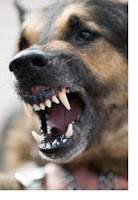
Dogs exhibit four defence reflexes; flight, freeze, flirt and fight. This means when a dog feels threatened or challenged they will run away (flight), enter an almost catatonic state of immobility or snarl and growl (freeze), or try to initate some play and act like a puppy to avoid a fight (flirt) or they may finally bite (fight). The fight reflex is the most common reason for the popular diagnosis ‘aggressive dog’. Dogs that are prone to ‘fight’ as the first means of defence, will growl, snarl and eventually bite if we don’t read the signals. Dogs aren’t confrontational creatures; they won’t initiate aggression unless provoked. If a dog feels threatened – particularly if someone bends over it, directly approaches it, makes eye contact or tries to stroke their head and neck, then depending on that dog’s personality it will tell the human to ‘back off’ in the only way they can communicate. Below is a list from 1 to 7 of the warning signals dogs will give off, which if unheeded could lead to an attack.

1. Yawning, blinking, nose licking
2. Turning head away, then turning body away/sitting/pawing
3. Walking away or creeping backwards
4. Standing crouched, tail tucked under
5. Stiffening up and staring
6. Growling/snarling, tail high
7. Lunging then bite

If you would like to know more about how you can understand your dog and get the relationship you deserve, then call Hanne Grice, dog behaviour specialist and dog listener on 01442 878628 or email us at info@walk-the-dog.net

Dogs and cats - can they get along?

A common question we get asked is “Can dogs and cats get along?” There is a common misconception that the two species cannot live happily ever after within a home. While there are some breeds of dogs that do not naturally interact well with other pets most breeds can be taught how to interact calmly with cats and live together in a house.

The way the two species are introduced to each other, their age and the pet’s previous experience with the other species will impact their behaviour. When introducing your dog to your cat it’s vital to create a calm and controlled situation where the two can accept one another and a positive association can be built. Here’s some tips on how to achieve this;

  • Get a family member or friend to sit on the sofa with your cat at their side. Gently hold the cat and stroke.
  • With your dog out of the room, practice some ‘sits’ or ‘stays’ to get the dog focused onto you. Then bring him into the room on his lead (say nothing, no eye contact with the dog).
  • If the dog pulls towards the cat, barks or gets excitable upon seeing the cat, immediately take him out of the room (say nothing and no eye contact – so the dog understands why he is isolated). You may have to repeat this several times depending on his reaction.
  • Once the dog has settled, bring him back into the room. If he dog remains quiet and calm, sit him down away from the cat. Pop him into a ‘sit’ and reward with a very tasty treat and praise “good dog”.
  • The cat should be stroked or praised for being calm too.
  • Let the cat move away if he wants to, but keep hold of the dog’s lead in case he tries to go after the cat. Repeat all of the above until both pets are relaxed in one another’s company. You can build up to the point where the dog is off the lead.